
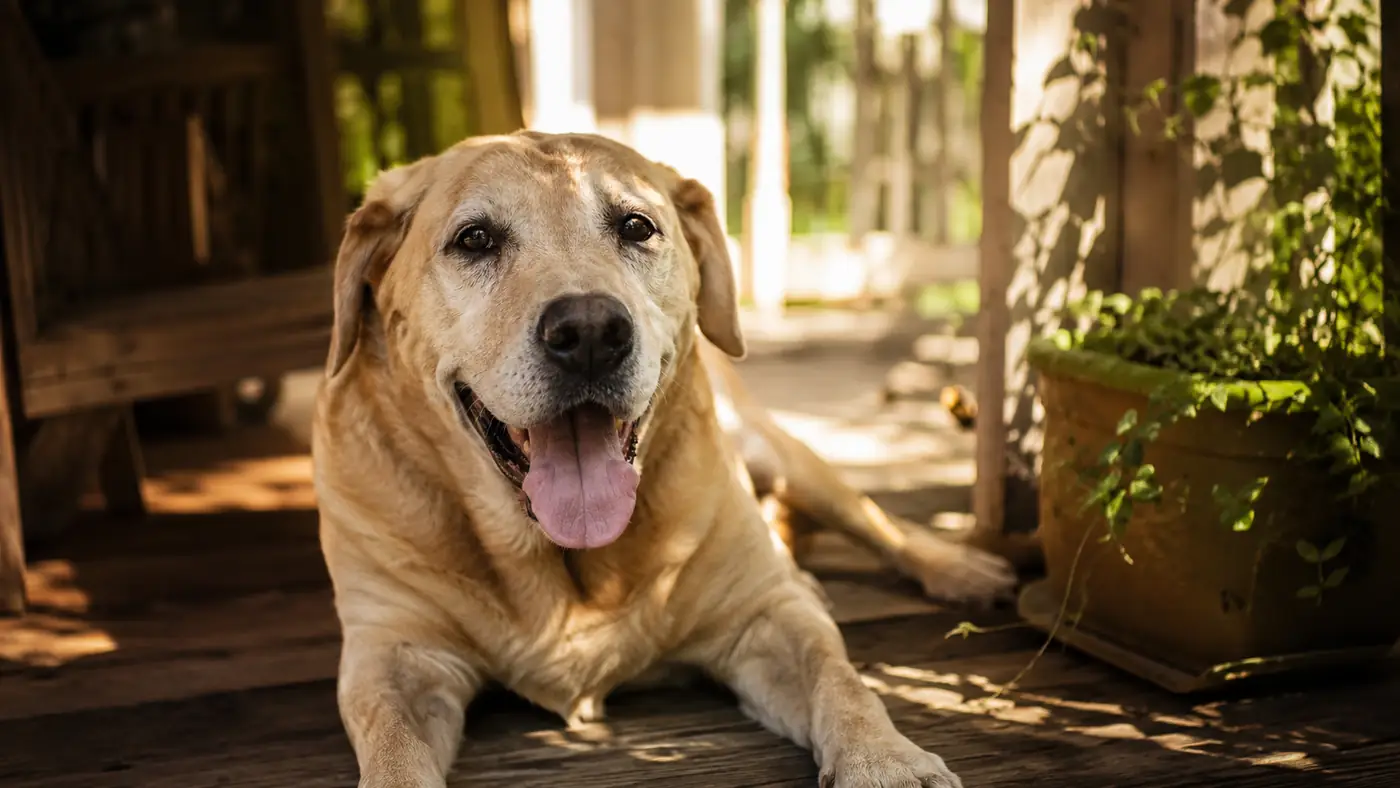
By July, my back porch turns into a triage unit. Duke, my 12-year-old Lab mix, flops into the shade the second the sun clears the fence line, and Gus, my black Lab mix, pants so hard I can hear him through a closed window. After fifteen years fostering dogs here in Ohio, hot months have taught me that overheating isn't just a big-dog or a short-walk problem. The fix that's worked best in my house isn't a fan or a frozen towel, it's the Arf Pets Cooling Mat, a gel pad that stays cool to the touch for hours without water, electricity, or a trip to the freezer.
Here are the ten reasons I've watched dogs overheat in summer, and why a cooling mat solves more of them than people expect.
Before You Read Ten Reasons, See the One Fix That Covers Most of Them
The Arf Pets Cooling Mat uses a pressure-activated gel that pulls heat away from a dog's body for hours, no plug-in, no freezer, no mess. Check today's price on Amazon and see if it fits your setup.
Amazon Check Today's Price on Amazon →Flat Faces Can't Pant Their Way Out of It
Otis, a pug mix I fostered last summer, taught me this the hard way. Brachycephalic dogs, pugs, bulldogs, Boston terriers, have shortened airways that make panting, their main cooling tool, much less efficient. Their bodies can climb to dangerous temperatures faster than a longer-snouted dog doing the same amount of running around. Laying a dog like Otis on the Arf Pets Cooling Mat during the hottest part of the day gives his body a head start, since the gel pulls heat out through contact instead of relying only on his airway.
Amazon See the cooling mat that helps flat-faced dogs recover faster →
Thick Double Coats Trap Body Heat
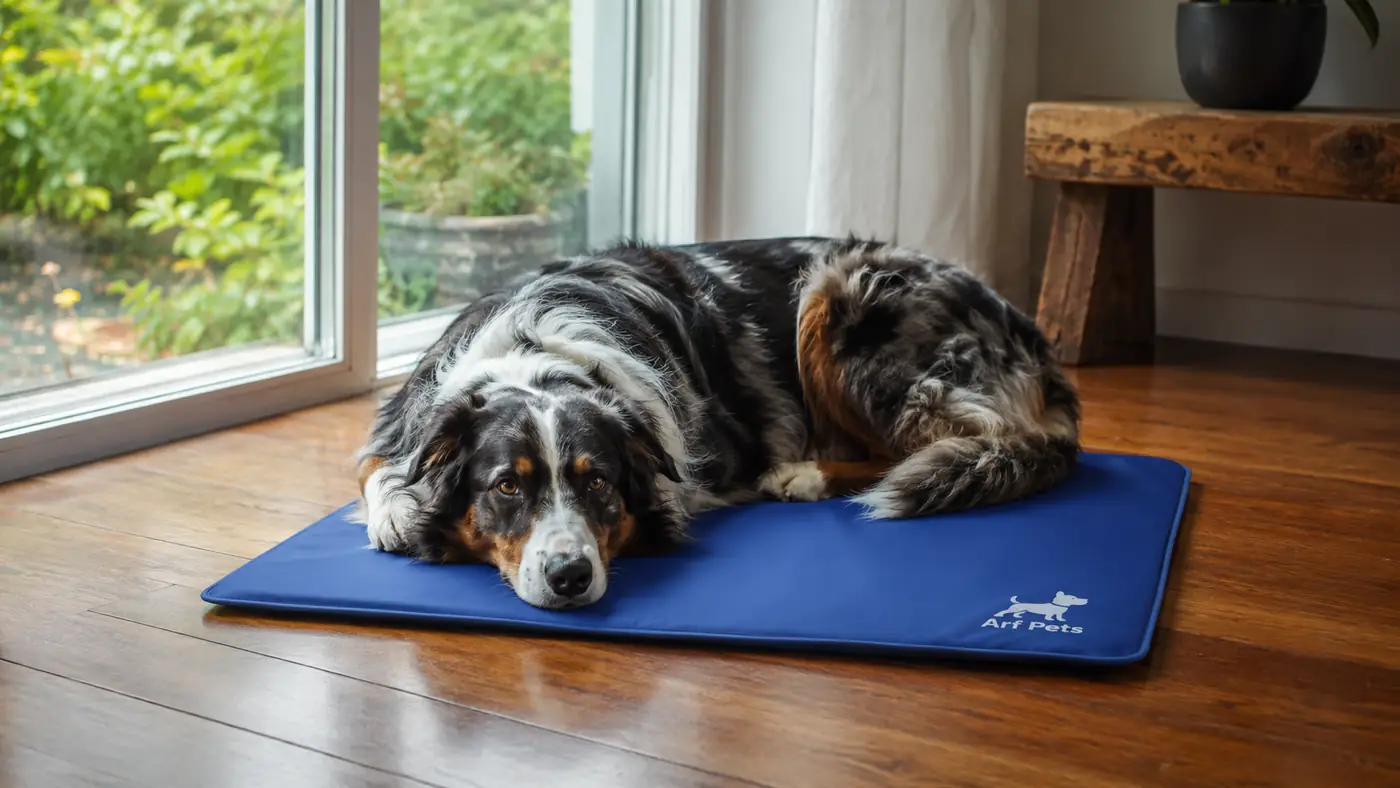
Ranger, my husky mix, sheds constantly but never loses that undercoat entirely, even in June. Double coats evolved for insulation, which means they hold heat against the skin exactly when a dog needs to release it. Shaving isn't the answer vets recommend anymore, since the coat also protects against sunburn. A cool surface to lie against lets heat transfer out through direct contact instead of staying trapped under all that fur. That's the whole idea behind the Arf Pets Cooling Mat, it works through contact and pressure, not airflow, so it still reaches a dog underneath a thick coat.
Senior Dogs Lose Their Internal Thermostat
Duke is twelve now, and his body doesn't bounce back from heat the way it did at six. Older dogs have less efficient circulation and often carry some heart or kidney strain that makes regulating temperature harder work. A senior dog can look fine one minute and be in real trouble twenty minutes later. I keep an Arf Pets Cooling Mat in Duke's favorite spot by the back door all summer, so cooling down doesn't require him to move far or pant hard to get there.
Extra Weight Works Like Built-In Insulation
A dog carrying extra pounds has more tissue between its core and the surface of its skin, which slows how fast heat escapes. I've fostered dogs who arrived overweight after being surrendered, and every one struggled more in July than the leaner dogs in the house. Weight loss helps long term, but it doesn't solve the problem this week. A cooling mat gives a heavier dog a way to dump heat through direct contact rather than relying entirely on panting.
Hot Pavement and Concrete Radiate Heat Upward
A dog lying on a sunbaked patio or driveway isn't just avoiding shade, it's absorbing radiant heat straight up through its belly and paws. I've touched concrete on an August afternoon here that was too hot for my own hand after five seconds. Moving a dog onto a cooling mat instead of a hot slab flips that transfer in the other direction, pulling heat out of the dog rather than pushing it in.
Crates and Kennels Turn Into Ovens Without Airflow
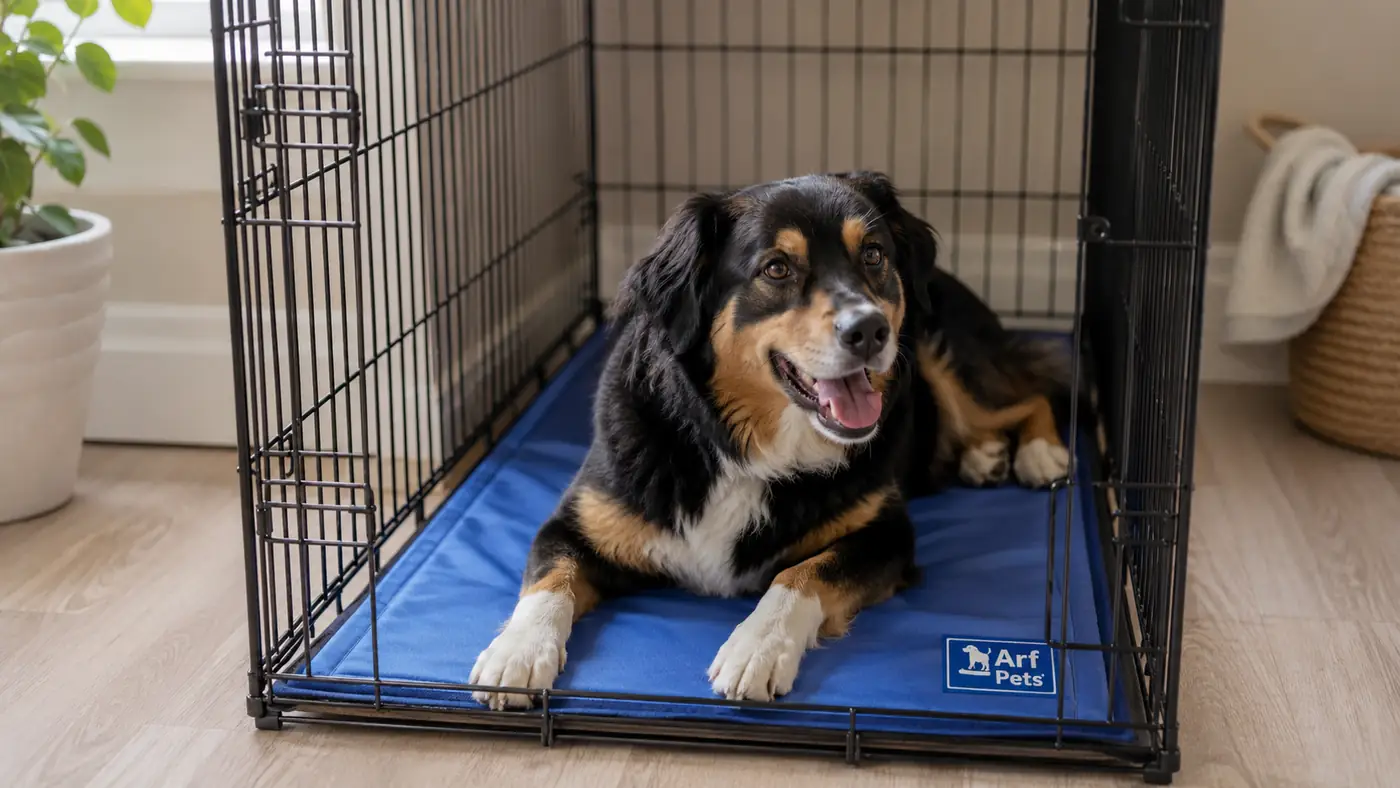
I run a lot of dogs through crates during fostering, and a crate in a sunny corner of a room can climb ten or fifteen degrees warmer than the rest of the house by early afternoon. Wire and plastic don't breathe the way we'd like to think, and a dog resting inside for a few hours can end up overheated before anyone notices. Lining the crate floor with an Arf Pets Cooling Mat instead of a regular bed gives a crated dog a passive way to stay cooler, without a fan running or the door propped open.
Dark Coats Soak Up More Sun
Gus is black from nose to tail, and I watch him warm up just standing in direct sun a few minutes longer than my lighter-coated dogs. Dark fur absorbs more solar radiation than light fur, which means a black or dark brindle dog heats up faster on an identical afternoon. Shade helps, but shade moves throughout the day and dogs don't always follow it. A cooling mat in whatever spot ends up shaded gives a dark-coated dog a reliable place to shed the extra heat.
Panting Only Cools So Much
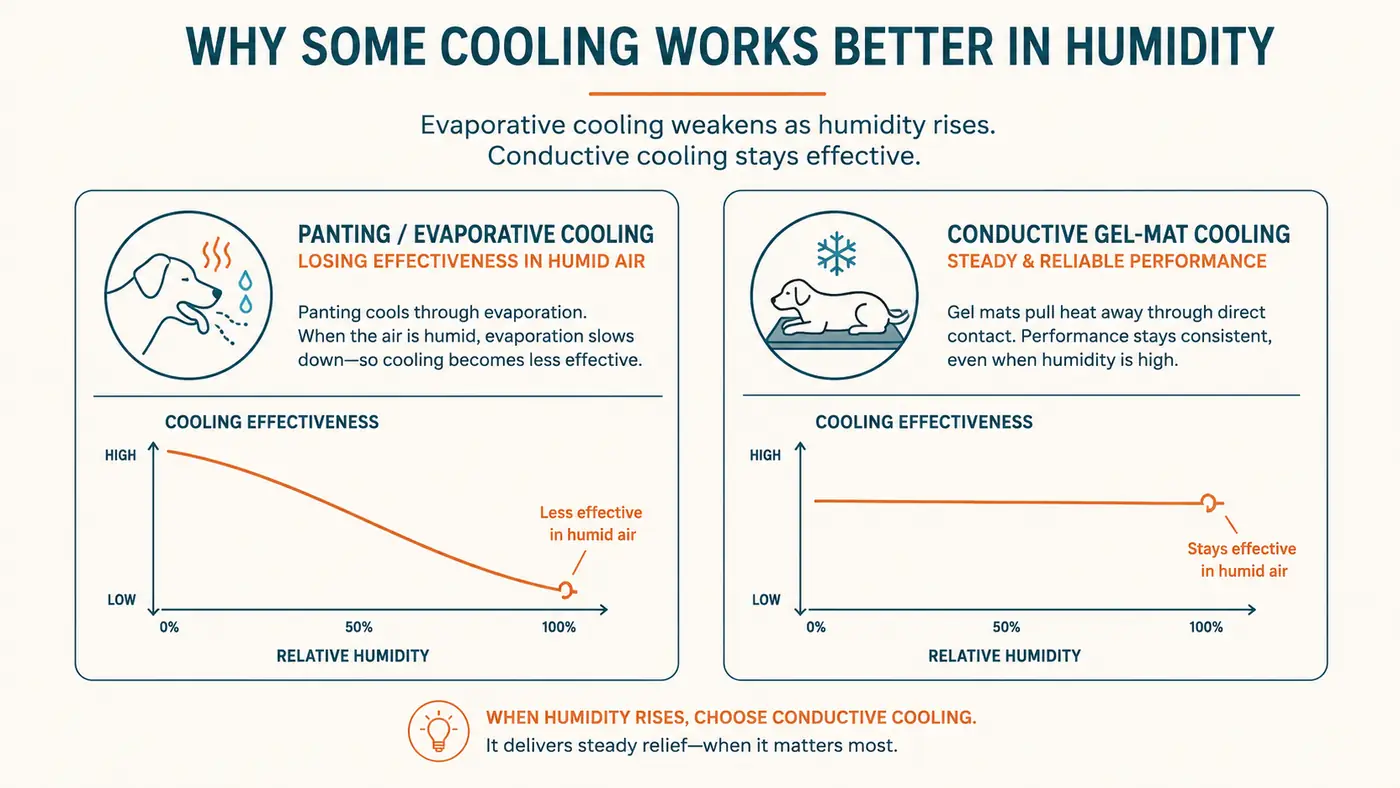
Panting works through evaporation, moving air over a wet tongue and airway to release heat, but it has real limits, especially in humid weather like we get here in Ohio, where the air is often too saturated for evaporation to work well. On the muggiest days, dogs pant hard and still don't cool down much. That's where a cooling mat earns its keep, because it cools through conduction instead of evaporation, pulling heat directly out of a dog's body regardless of humidity.
Dehydration Makes Everything Worse, Faster
A dog that's already a little dehydrated has less capacity to regulate its temperature, since panting and normal cooling both rely on adequate fluid. I keep extra water bowls out in summer, but water alone doesn't stop a dog from pacing and panting while it searches for somewhere comfortable to settle. Giving a dog a cool, comfortable place to lie down, like an Arf Pets Cooling Mat, reduces how much he has to pant and pace in the first place, which means less fluid lost chasing relief he hasn't found yet.
There's No Dedicated Cool-Down Zone in the House
The biggest pattern I've noticed across ten-plus dogs and fosters, Daisy, Pearl, Tank, and Pixie included, is that the ones who overheat worst are the ones without an obvious spot to cool off. Dogs default to bare floor, a shaded porch corner, or sometimes the bathtub, none of which are reliable or always available. Once I started leaving an Arf Pets Cooling Mat in the same spot in the living room every summer, Duke, Ranger, and Gus all started using it on their own within a day or two.
What I'd Skip
I've tried a few things over the years that didn't earn a permanent spot in the routine. Cooling vests are fine for a walk, but most dogs shake them off the second they're back inside, so they don't help with the hours spent resting at home. Frozen towels work for about twenty minutes before they're room temperature again, and box fans running all day are a real hit to the electric bill without doing much for a dog lying on carpet instead of directly in the airflow. The cooling mat has stuck around in my house because it doesn't need me to reset it, refreeze it, or plug it in, it just works whenever a dog lies down on it, all summer long.
The dogs who overheat worst aren't always the ones outside the longest, they're the ones with nowhere cool to land when they come back in.
Ten Reasons, One Mat That Covers Most of Them
Whether it's a flat face, a thick coat, a senior body, or just a house with no cool spot to retreat to, the Arf Pets Cooling Mat addresses the same underlying problem: dogs need somewhere to actively shed heat, not just somewhere shady. Check today's price on Amazon before the next summer heat wave hits.
Amazon Check Today's Price on Amazon →