
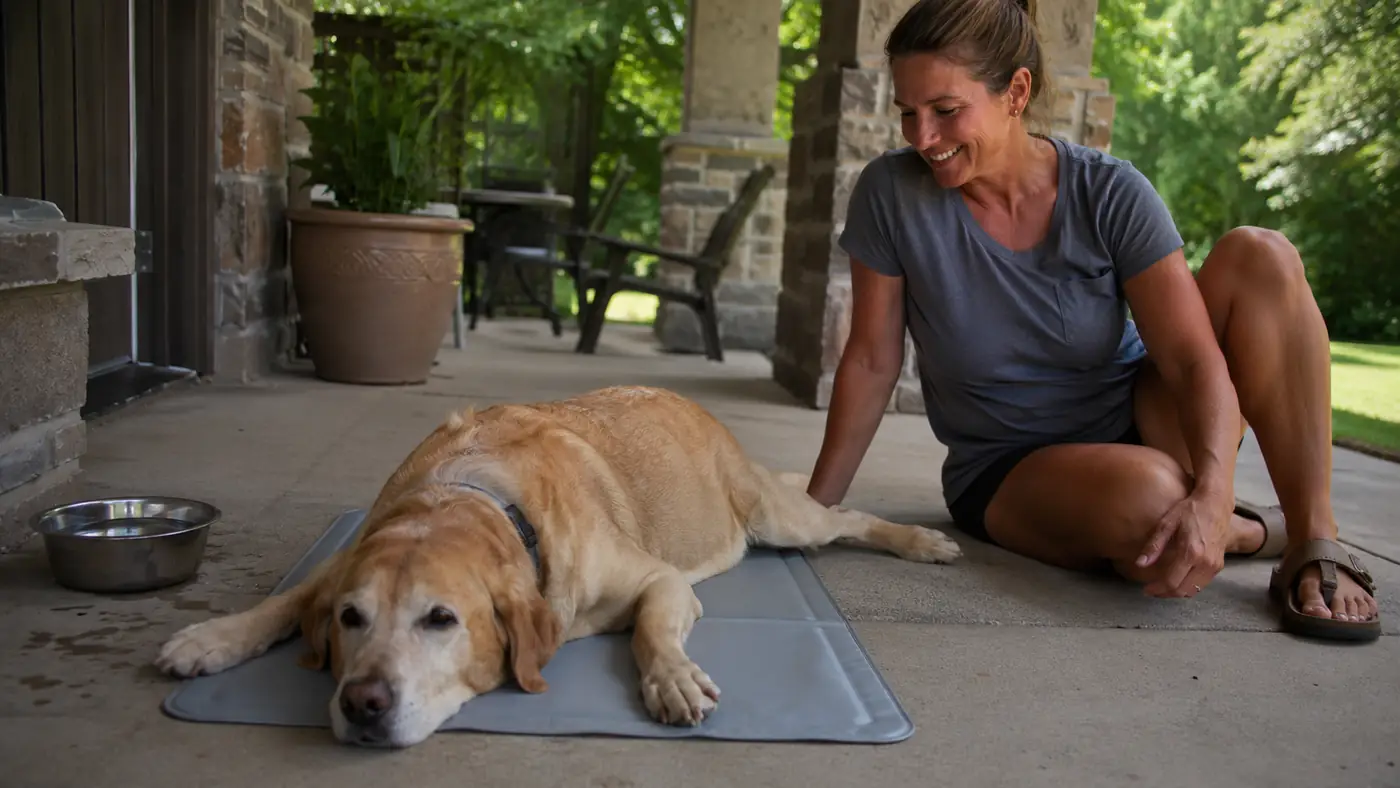
Duke is twelve this year, a yellow Lab mix who used to out-run every dog at the rescue where I still foster, and this was the first summer I watched him just stop wanting to move once the temperature climbed past 85. He'd pant hard on the porch by two in the afternoon, flop down in whatever shade he could find, and refuse the walk he normally begged for. That's what pushed me to finally buy the Arf Pets gel cooling mat instead of just running the box fan harder and hoping.
I bought the large, 32 by 20 inches, in early June and it's been down almost every day since, first for Duke alone, then shared with my other two dogs Ranger and Gus, and for a stretch in July with two fosters, Otis and Daisy, who came through my house mid-heat-wave. This review covers what actually happened across that stretch, not a first-week impression.
I'll say up front that I'm not a gadget person. Fifteen years of fostering has taught me to be skeptical of anything that promises comfort without effort, because most of it ends up in a closet by August. This one didn't, and that alone is why I'm writing about it in this much detail.
The Quick Verdict
A genuinely useful piece of summer gear for a house with more than one dog. It earned a permanent spot on my porch, not just a trial run.
Amazon Check Today's Price →Ohio doesn't ease into summer, it just shows up at 95 degrees
If your dog is already flattening himself onto the tile floor by noon, the Arf Pets gel mat is the first thing I'd add before you touch the thermostat.
Amazon Check Today's Price on Amazon →How I've Used It
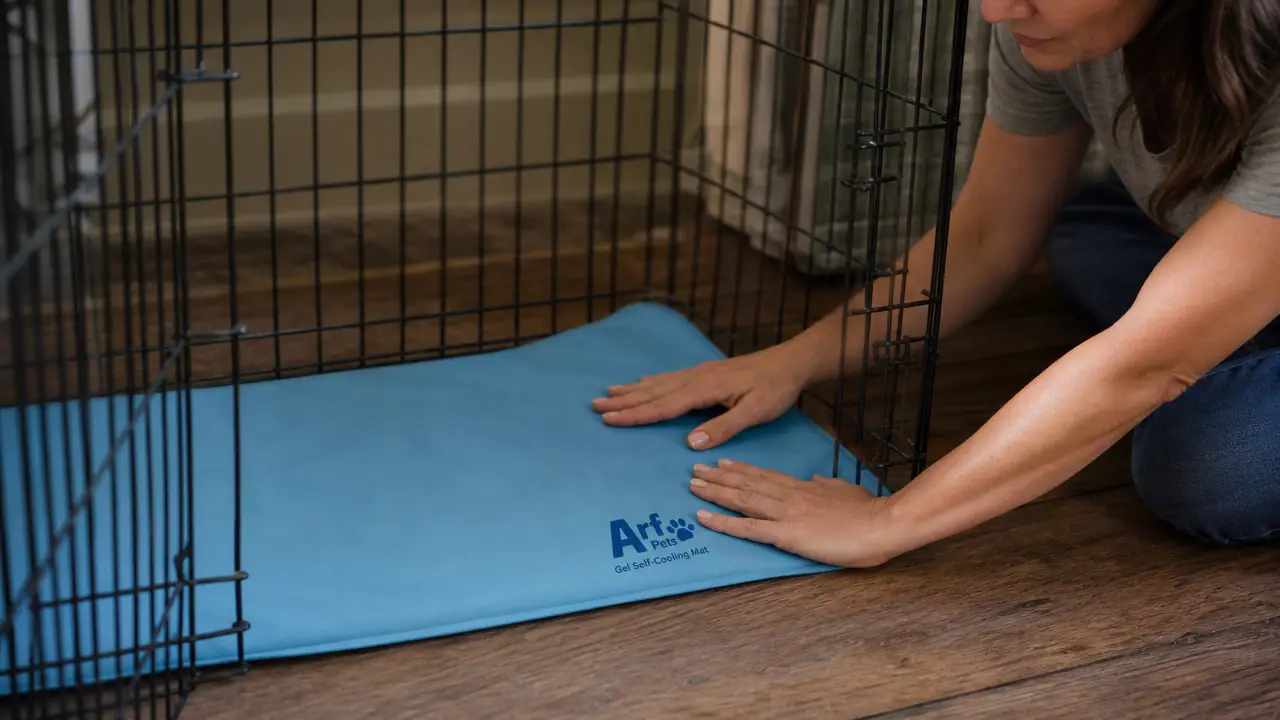
The setup is almost insultingly simple, which after fifteen years of fostering I've learned to appreciate. No water reservoir, no plugging anything in, no freezer space given up. You unroll it, press on the surface a few times to activate the gel layer, and it's ready. I moved it around all summer depending on where the heat was worst, the shaded end of the porch in the morning, the tile hallway by the back door in the afternoon, and eventually a permanent spot in Duke's crate once the real heat set in around the Fourth of July.
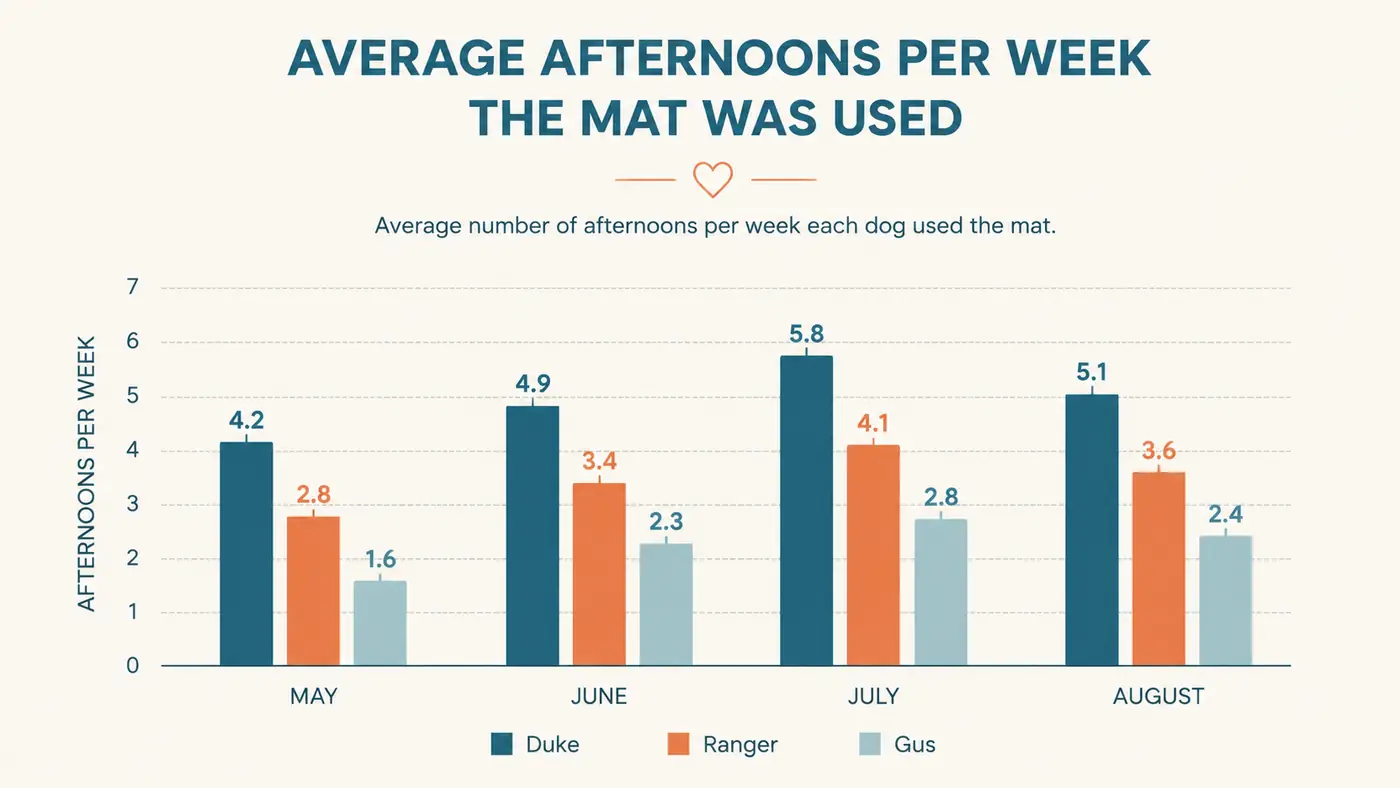
Duke took to it within the first hour. He's never been a mat dog, he'd usually rather sprawl straight on cool tile, but the first ninety-degree afternoon I watched him choose the Arf Pets mat over the bare floor without any coaxing, which told me more than anything I could have measured. I remember standing in the kitchen watching him walk right past his usual spot on the linoleum to lie down on the mat instead, and thinking, well, that settles that.
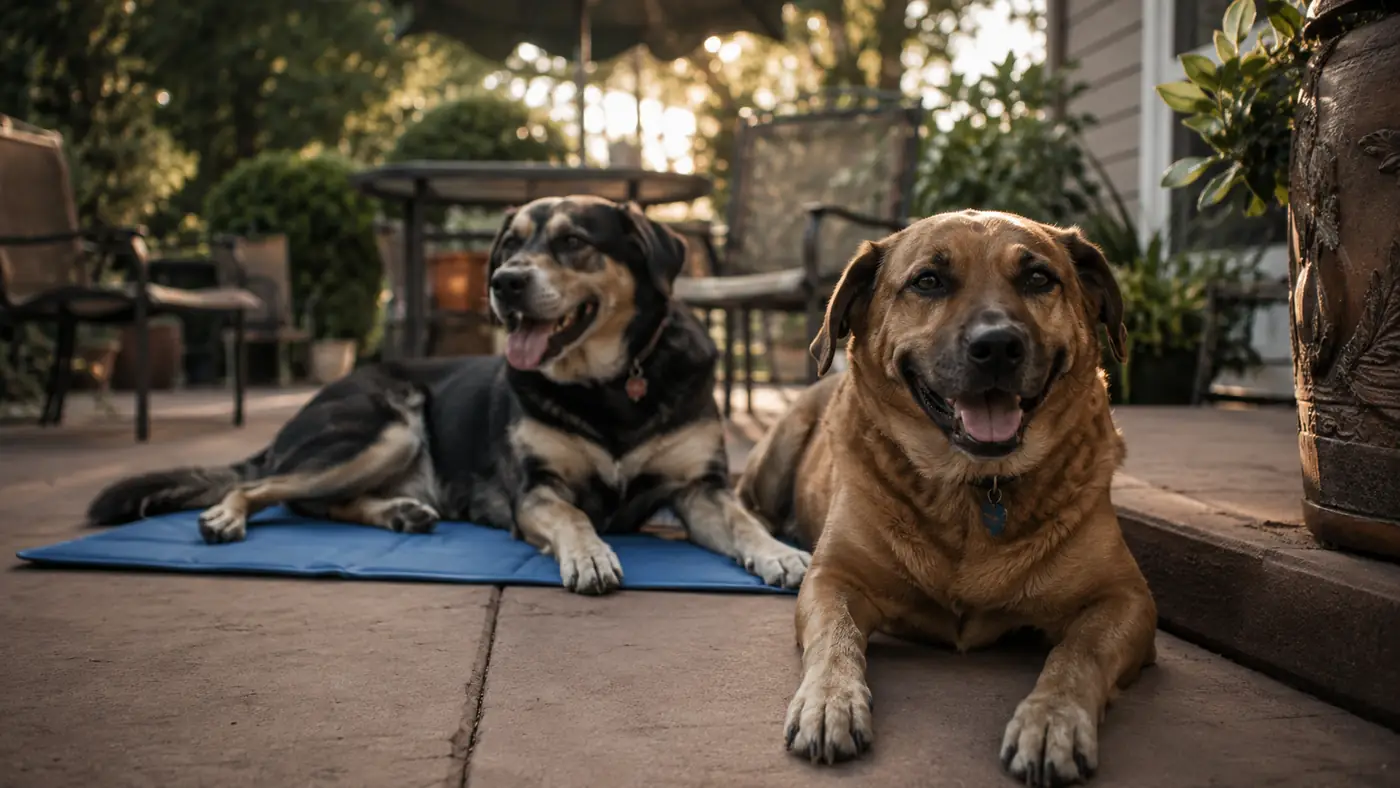
Ranger, my middle dog, is a shepherd mix who runs hot even in spring, and he claimed the mat almost as fast as Duke did. Gus, my youngest, mostly ignored it until August when even he slowed down. By late summer it had become a shared resource, and more than once I caught Duke and Ranger lying on it back to back, which is its own small proof of concept in a house with three dogs and one mat.
I ended up establishing an unofficial rotation without really meaning to. Whoever seemed the most uncomfortable got first claim, and the other two would wait their turn or find a shady spot nearby. It sounds silly to describe dog traffic patterns in this much detail, but if you've got more than one dog in a hot climate, you already know how much of summer parenting comes down to exactly this kind of logistics.
What's Actually in This Mat
Arf Pets builds this around a pressure-activated gel that pulls heat away from the body on contact rather than relying on evaporation like a wet towel would, or refrigeration like the hard plastic cooling plates some brands sell. That's the whole pitch, and it's why there's no cord, no water bowl to spill, and nothing to remember to refill before the dog needs it.
In practice that means it's ready the second a hot dog lies down on it, which mattered more than I expected. With three dogs and rotating fosters, I don't have the bandwidth to pre-chill something in the freezer every morning before anyone gets uncomfortable. This just sits there, always available, and resets itself once the dog gets up and the surface is exposed to air again.
The surface itself is a soft, slightly rubbery vinyl that doesn't feel like anything special to the touch when it's cool, but the difference is obvious the moment a hot dog's weight presses into it. I noticed it myself kneeling down to check on Duke one afternoon, the mat was noticeably cooler than the floor tile next to it.
It rolls up small enough to store flat behind a door when it's not in use, which mattered to me more than I expected going in. Between three dogs and a rotating cast of fosters, my house is already full of gear, and I wasn't looking for one more bulky item competing for closet space.
How It Held Up Across the Season
I want to be specific about the stretch this covers because a one-week review of a cooling product tells you almost nothing. Ohio summers run hot and sticky from June through the end of August, and this year we had a run of eleven days over 90 degrees in July alone. The mat was in daily rotation that entire month, sometimes with two dogs on it in shifts.
By the second month I'd settled into a routine. Morning walk before eight, mat down on the porch by nine once the sun hit that side of the house, moved inside to the hallway by early afternoon, then into Duke's crate for the evening since he sleeps there and the bedroom doesn't always keep up with the heat overnight.
The fosters, Otis and Daisy, came through for about three weeks in the thick of the heat wave, and I watched Otis in particular, a nervous terrier mix who'd just come off the street, settle onto the mat within his first day here. It became one of the few things in a chaotic transition period that seemed to actually comfort him, which I hadn't expected from a piece of gear I bought purely for temperature regulation.
There was one afternoon in late July, a backyard cookout with the mat set up under the maple tree, that stuck with me. I had five dogs on the property between mine and a friend's, and Duke and Otis both ended up parked on the mat while the others sprawled on bare grass. Nobody told them to, they just gravitated there on their own, which is about as honest a test as I could ask for.
Where It Fits Best in a Daily Routine
The mat earned its keep in three specific spots in my house. The crate is the obvious one, Duke sleeps better through hot nights with it under him than he did on his regular bed alone. The car is the second, I keep a smaller size in the back of my SUV now for after-walk cooldowns before we head anywhere else, since a hot dog in a hot car for even five minutes is a real risk I don't take chances with.
The third spot is just wherever the dogs naturally camp out during the worst part of the afternoon. I stopped trying to dictate where the mat lives and just started putting it wherever Duke was already lying down uncomfortably. That flexibility, being able to move it room to room without any setup, is honestly half the reason it got used as consistently as it did.
It's also become part of how I introduce fosters to the house now. A cooling mat in a crate corner seems to read as neutral, low-stakes comfort to a nervous dog in a way that a full bed sometimes doesn't, and I've started keeping it near the crate specifically for that first uneasy week.
I even brought it along on a weekend trip to my sister's place in July, just folded flat in the trunk next to the crate. It meant Duke had one familiar, cool spot waiting for him in an unfamiliar house, which took one variable off the list during a trip that was already going to be a little stressful for him.
Alternatives I Considered First
Before I bought this, I'd been getting by with a wet towel from the freezer and a box fan pointed at Duke's usual spot, plus running the AC lower than I'd like on the worst days. The towel approach works for maybe twenty minutes before it's just a damp towel at room temperature, and refreezing it every couple hours isn't realistic when you're also managing feeding schedules and foster intake.
I also looked at raised cot-style cooling beds with mesh fabric, which are genuinely good for airflow but don't do much actual heat transfer, they just keep the dog off hot ground. And I considered a cooling vest, which I ended up buying separately for walks, but a vest doesn't solve the problem of a dog who just wants to lie down somewhere cool for three hours in the afternoon.
The gel mat ended up filling a gap none of those other options covered well: passive, always-ready cooling for the long stretches of the day when the dogs aren't out walking, they're just trying to get through the heat at home. Running the AC lower helps everyone in the house, but it's an expensive way to solve one dog's problem, and the mat let me keep the thermostat where it was most days.
What I Liked
- Ready to use immediately, no water, ice, or outlet needed
- Reactivates on its own once the dog gets up and air hits the surface again
- Worked across three different dogs and two fosters without any of them needing training to use it
- Portable enough to move between porch, hallway, crate, and car
- Reasonable size options for everything from a small foster to a full-grown Lab mix
- Rolls flat for easy storage between the hottest stretches of summer
Where It Falls Short
- It's a supplement to cooling, not a replacement for shade or AC on the worst days
- Cooling is noticeably strongest in the first stretch of use each session, then tapers as it warms toward body temperature
- Large size takes up real floor space if you're rotating it through a small house like mine
- You do need to press or knead the surface to reset it between uses, which is one more small step in a busy routine
I stopped trying to dictate where the mat lived and just started putting it wherever Duke was already lying down uncomfortably.
Who This Is For
This makes the most sense for anyone with a dog who visibly struggles once the temperature climbs, senior dogs like Duke especially, but also thicker-coated breeds, brachycephalic dogs who already have a hard time regulating heat, and multi-dog households where you need a cooling option that doesn't require constant refilling or babysitting. Foster households will get extra mileage out of it the way I have, it's low-maintenance enough to hand off between dogs without a learning curve.
It's also a good fit if your dog spends real time outdoors, on a porch, at a backyard cookout, in a garage while you're working, anywhere that isn't fully climate controlled but still needs to be livable for a few hours at a stretch.
Who Should Skip It
If you're in a climate that rarely breaks 80 degrees, or your dog spends nearly all their time in fully air-conditioned rooms, this is probably more mat than you need. It's also not a fix for genuine heat emergencies, if a dog is showing signs of heatstroke, that's a vet situation, not a mat situation. Think of this as daily-comfort gear for real, sustained heat, not a medical device.
And if your only goal is something to use for a single road trip or one hot week a year, you might not get enough use out of it to justify adding one more item to the closet. This is gear for households that see real, repeated heat, not a one-off purchase.
Don't wait for the first 95-degree day to figure this out
I bought mine reactively, after watching Duke struggle through an afternoon he shouldn't have had to. Get ahead of it this season.
Amazon Check Today's Price on Amazon →