
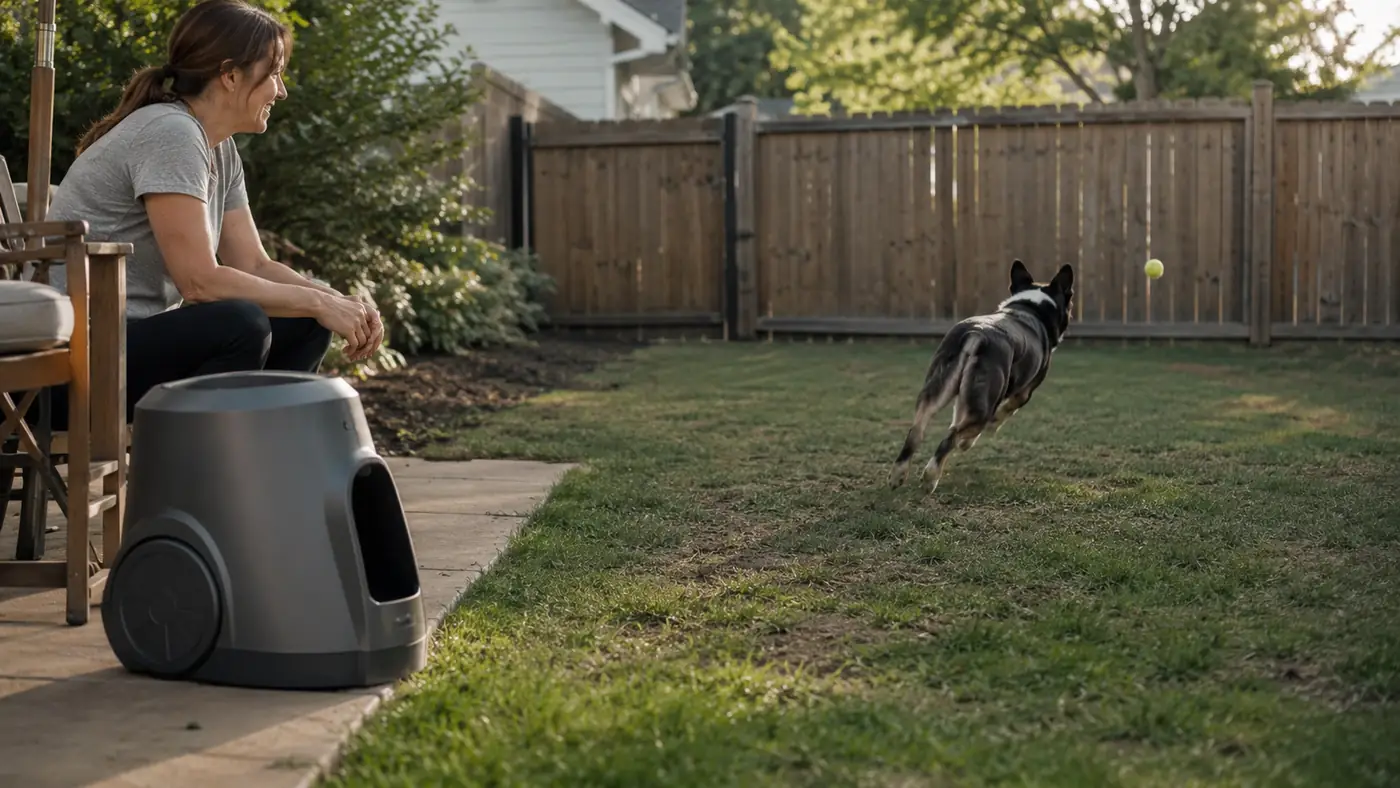
Gus has never once looked tired in his life, or at least that is how it felt before I brought a MEKAPLE launcher home this past winter. He is a four-year-old mixed breed who came to us as a foster and never left, and by the time he was two I had accepted that a normal fifteen-minute walk did almost nothing for him. He would pace the kitchen an hour later like nothing had happened. Duke, our twelve-year-old Lab mix, burned off that same kind of energy in his own younger years, but Gus is built differently, and after fifteen years of fostering rescues out of our house in central Ohio, I have learned that a bored high-energy dog turns into a destructive one faster than most people expect. This guide is the exact process I use to actually tire Gus out with the launcher, not just entertain him for ten minutes and call it exercise.
None of what follows is complicated, but there is a real difference between owning an automatic ball launcher and using one in a way that actually exhausts a high-drive dog. I made almost every mistake below in the first few weeks, from picking the wrong distance setting to running sessions too short to matter. What changed things for us was treating the launcher less like a toy and more like a tool with a process behind it, and that process is what I am walking through here, step by step.
A tired dog doesn't dig, bark, or bounce off the walls.
If your dog's energy outlasts your patience for standing in the yard with a tennis ball, the MEKAPLE automatic launcher takes that job off your plate and gives a high-drive dog a real outlet, on a schedule you control.
Amazon Check Today's Price on Amazon →Step 1: Measure Your Yard Before You Set Up Anything
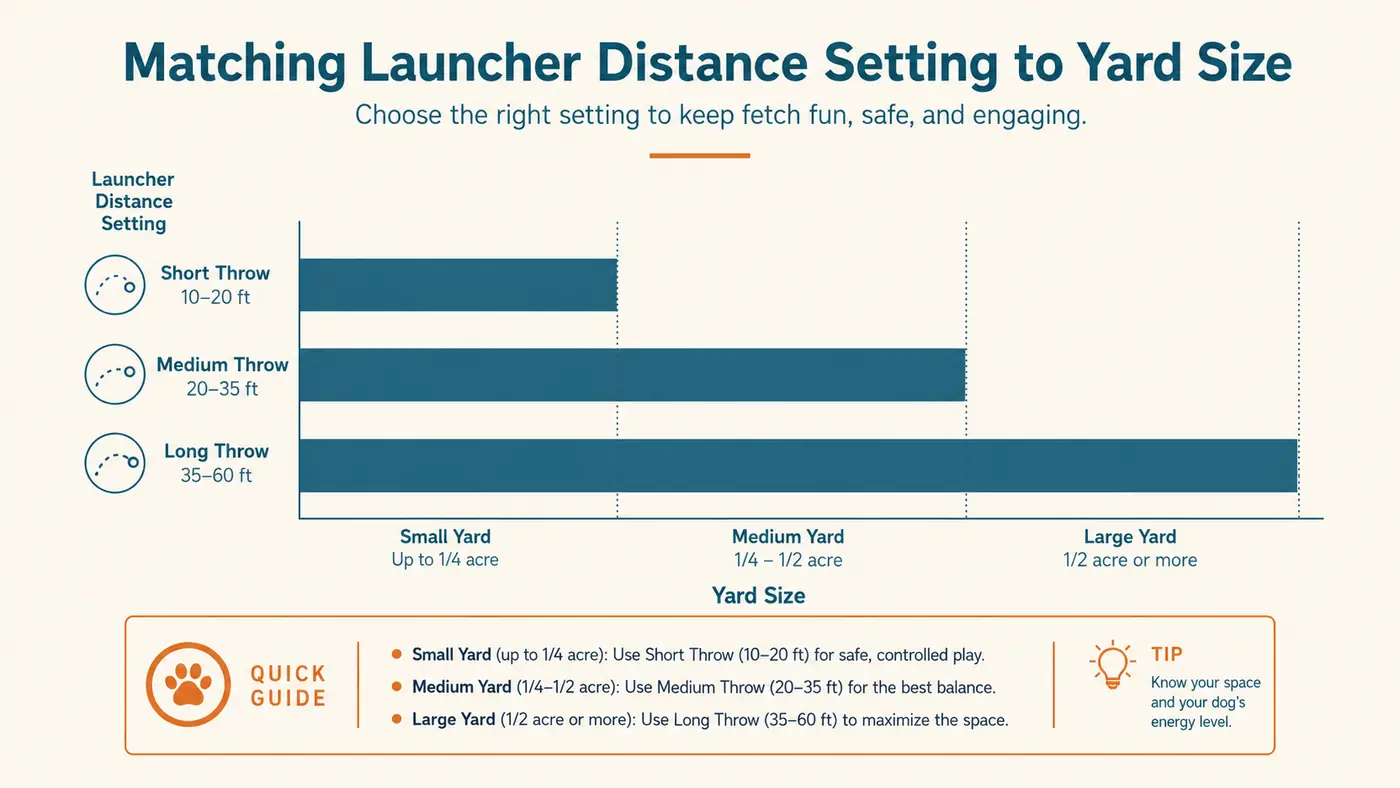
Before Gus ever chased a single ball, I walked our backyard with a tape measure, and I would tell anyone starting out to do the same before they even plug the launcher in. The MEKAPLE launcher gives you three distance settings, and knowing which one actually fits your space matters more than people expect. Set it too long for a small yard and the balls end up in a flower bed or bouncing off a fence, which is how a launcher turns into a hazard instead of exercise. Set it too short for a big, open yard and your dog barely breaks a jog, which defeats the whole point of buying one in the first place.
Our backyard runs about forty feet from the patio to the fence line, which put us right in the middle setting from day one. I also checked for anything Gus could plow into at a dead sprint, a garden bed along one side and a low retaining wall near the back corner, and I angled the launcher so his running lane stayed clear of both. That five-minute walk-through before the first session saved me from a launcher aimed straight at my tomato plants.
I would also get familiar with the launcher's manual button before ever letting it run on its own timed cycle. For the first couple of sessions, I stood right at the unit and pressed the manual fire button myself, which let me watch exactly how far each distance setting actually threw a ball in our specific yard instead of guessing from the box description. Once I trusted the middle setting and Gus's response to it, I let the launcher shift to its automatic timed cycle so I could step back and let him run the session mostly on his own while I stayed close by.
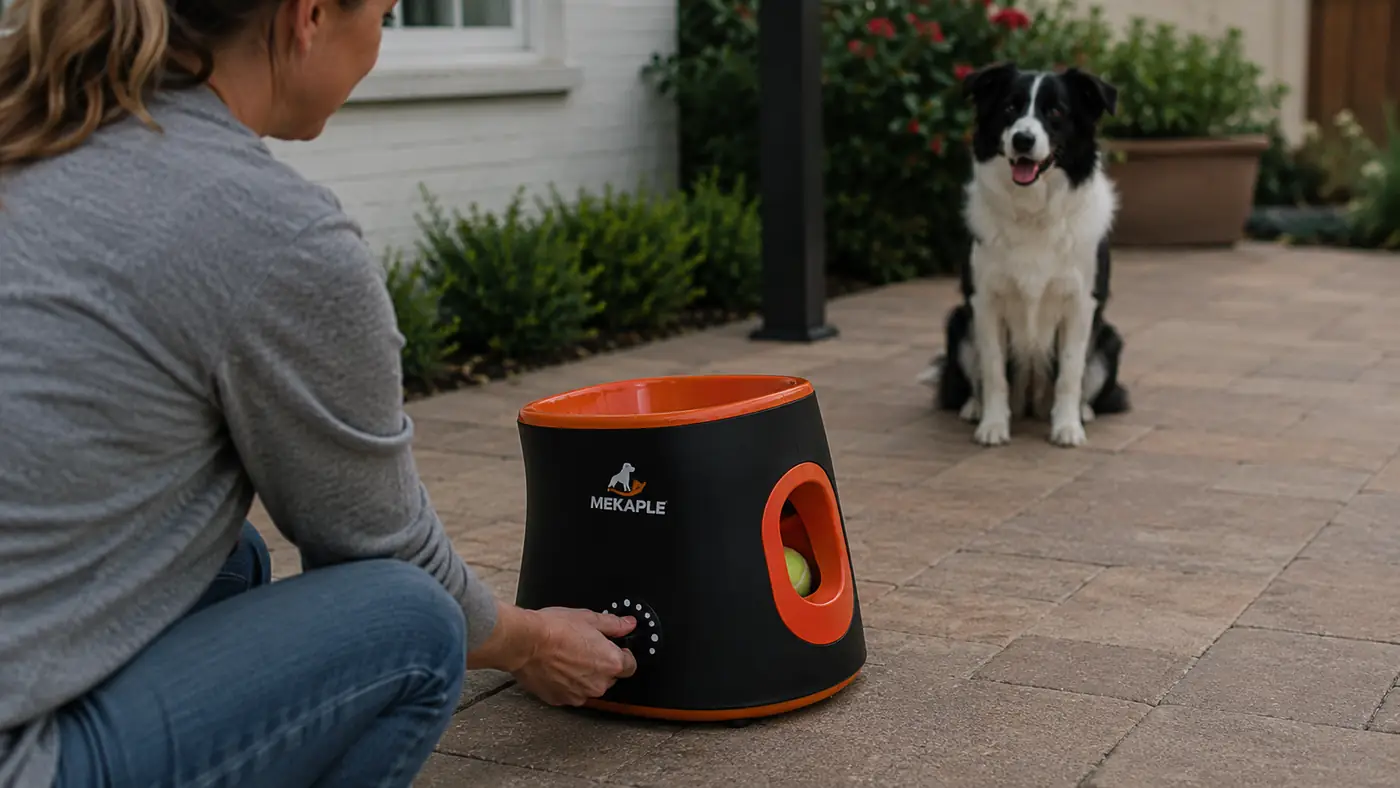
Step 2: Load It Right and Match the Setting to Your Dog's Actual Drive
The launcher holds a hopper of mini tennis balls and feeds them one at a time, and I load ten to twelve balls at once so Gus can run a full session without me refilling it mid-sprint. Worn or flattened balls are worth pulling out before they jam the chute. Gus has strong jaws and has flattened a handful of the original set into something closer to a Frisbee shape over the months, and a misshapen ball is the single most common reason a launcher session grinds to a halt.
The distance setting should match the dog in front of you, not just the yard. Gus gets the full middle setting because he has the stamina and the sprint speed to make it worth it. Duke, at twelve, would not want anything close to a full sprint even if his joints could handle it, so a launcher session built for an older or lower-drive dog should start on the shortest setting and only move up if the dog is asking for more, not because the box says the longest throw is the most impressive one.
I also do a quick ball check once a week now, rolling each one across the patio to spot flat sides or cracked seams before they end up in the chute mid-session. It takes about two minutes and it has saved me from a stalled launcher more times than I can count, especially during a busy stretch when Gus is running two sessions a day and going through balls faster than usual.
Step 3: Build a Predictable Time Block Instead of a Random One
Gus starts pacing the kitchen and nosing the back door around four in the afternoon most days, and once I noticed that pattern, I stopped trying to squeeze launcher sessions in randomly and started running them at that exact time instead. Dogs settle faster when they can predict relief is coming. Within a couple of weeks of running the launcher at four o'clock every day, the pacing and door-nosing started earlier that hour instead of building all afternoon, which told me Gus had actually learned the schedule.
A session that actually tires out a high-energy dog needs real length, not a quick five-minute burst. I run the launcher for fifteen to twenty minutes with Gus, long enough that he is visibly winded and his tongue is hanging by the end, short enough that I can still get dinner started right after. Anything shorter than ten minutes barely dents a dog with Gus's drive, and I learned that the hard way during the first week when I kept cutting sessions short and wondering why he was still wired an hour later.
Weekends work a little differently in our house, since I am usually around longer and Gus knows it. I will sometimes split the launcher into two shorter sessions, one mid-morning and one in the late afternoon, rather than one long stretch. That has worked just as well for actually tiring him out, and it keeps the launcher itself from running nonstop in a way that would wear down the hopper mechanism faster than it needs to.
Step 4: Supervise Every Session, Especially With More Than One Dog
A launcher fires on a set interval, and it does not know or care which dog is standing closest to where the ball lands. With just Gus in the yard, I have let it run while I sat on the porch nearby. With more than one dog out there, I stay standing and watch every single throw, because a launcher firing into a group of dogs at a dead sprint is exactly how you end up with a collision nobody meant to happen.
We have had five fosters cycle through since I bought this launcher, Otis, Daisy, Pearl, Tank, and Pixie, and every one of them reacted differently to it. Otis, a shy hound mix, needed almost a week of watching the launcher run from a distance before he would go near it, and I never once let him near it unsupervised while he was still nervous around the motor noise. Daisy and Tank fell into the routine almost immediately and joined Gus's rotation without much coaching. Pearl and Pixie were smaller and less interested, and I did not force it, since not every dog needs the same tool to get tired.
I also watch for signs a dog is getting overstimulated rather than just excited, stiff body language over a ball, a hard stare at another dog near the landing spot, or snapping at the air out of frustration when a retrieve does not go their way. Gus has never gotten there, but I have seen a foster start heading in that direction, and the right move is to call a short timeout, let the launcher pause, and let everyone reset before starting the next round. Running a session past the point of fun is not the same as tiring a dog out the healthy way.
Step 5: Add a Cool-Down So the Tiredness Actually Sticks
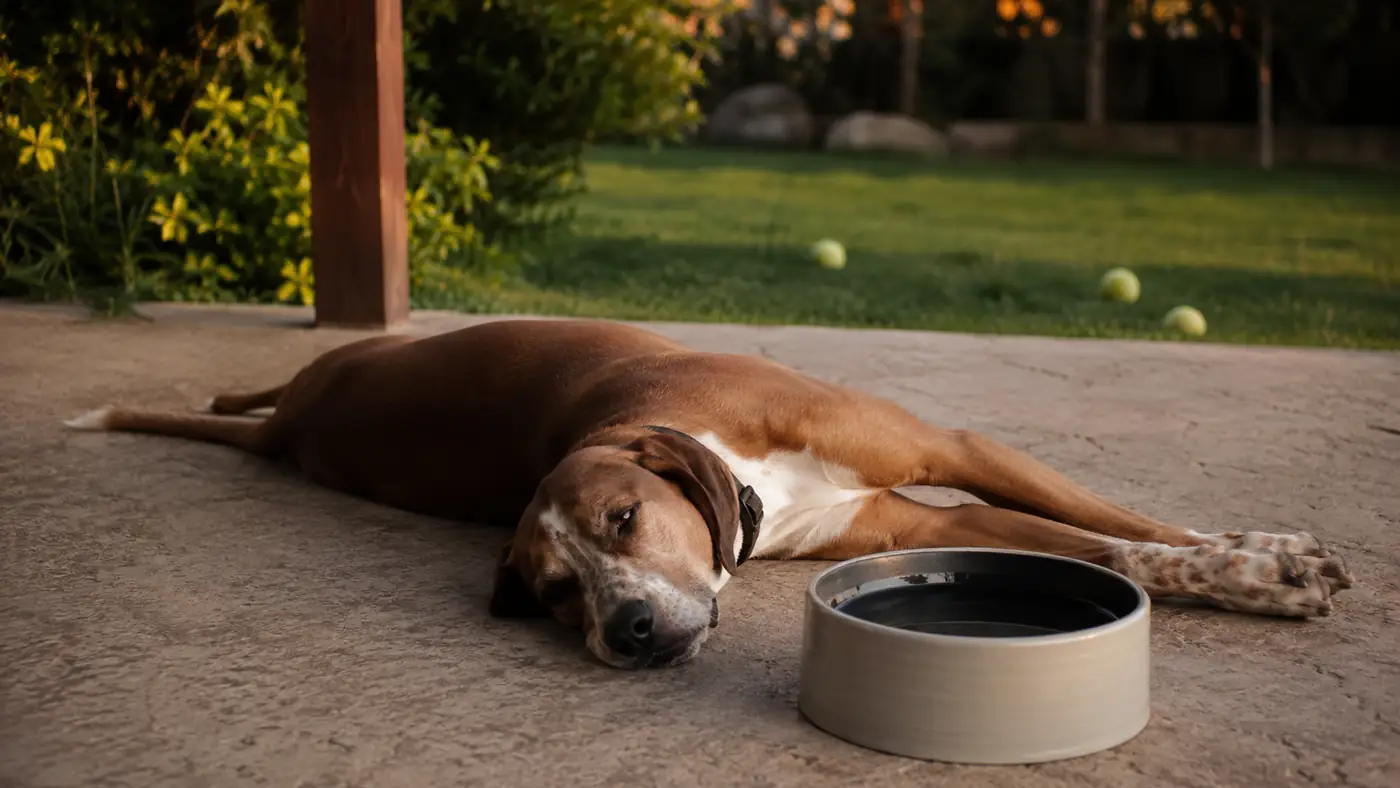
Ending a launcher session cold, with a dog still catching his breath, does not lock in the tired effect the way you would think. I always bring Gus straight from the launcher to a shaded spot with fresh water and let him lie down for a few minutes before we go back inside. A dog who cools down properly settles into an actual rest afterward instead of getting a second wind ten minutes later from the leftover adrenaline of a full sprint.
This step matters even more in warm weather. On hot Ohio afternoons I shorten the launcher session itself and stretch out the cool-down instead, since a dog sprinting full speed in July heat needs water and shade a lot more urgently than a dog running the same session in October. I keep a bowl filled and sitting in the shade before the launcher ever turns on, so Gus has it waiting the second the session ends instead of me scrambling to fill one after the fact.
What Else Helps
The launcher handles the physical side of Gus's energy, but I have found it works best paired with something that tires his brain out too. A slow sniff walk around the block after dinner, once his legs are already spent from the launcher, seems to finish the job in a way pure running never quite does on its own. I also rotate in a few minutes of basic obedience work, sit, stay, wait at the door, right after a launcher session, since a physically tired dog is far more receptive to that kind of practice than a wound-up one. Biscuit, our senior cat, keeps well clear of the whole production, which I consider the correct call on her part, and Duke mostly watches from the porch these days, occasionally wandering over to steal a stray ball out of pure spite. None of that replaces the launcher itself, but it stretches the effect of a single session a lot further into the evening.
I also build in a lower-key day here and there, usually once a week, where Gus gets a longer walk instead of a launcher session. Repetitive sprinting every single day can wear on a dog's joints over time even at a healthy age, and mixing in a rest day keeps the routine sustainable instead of turning into another chore neither of us can skip. Gus does not love the change of pace, but he handles it fine, and it has kept the launcher feeling like a treat rather than an obligation on both ends of the leash.
A tired dog is not an accident. It is a schedule, a setting, and a launcher that shows up in the same spot every single day.
Give that energy somewhere to go before it becomes a problem in your house.
This is the exact MEKAPLE automatic launcher I run with Gus every afternoon, three distance settings, a hopper that holds a full session's worth of balls, and enough durability to handle a dog who does not know how to quit.
Amazon Check Today's Price on Amazon →