
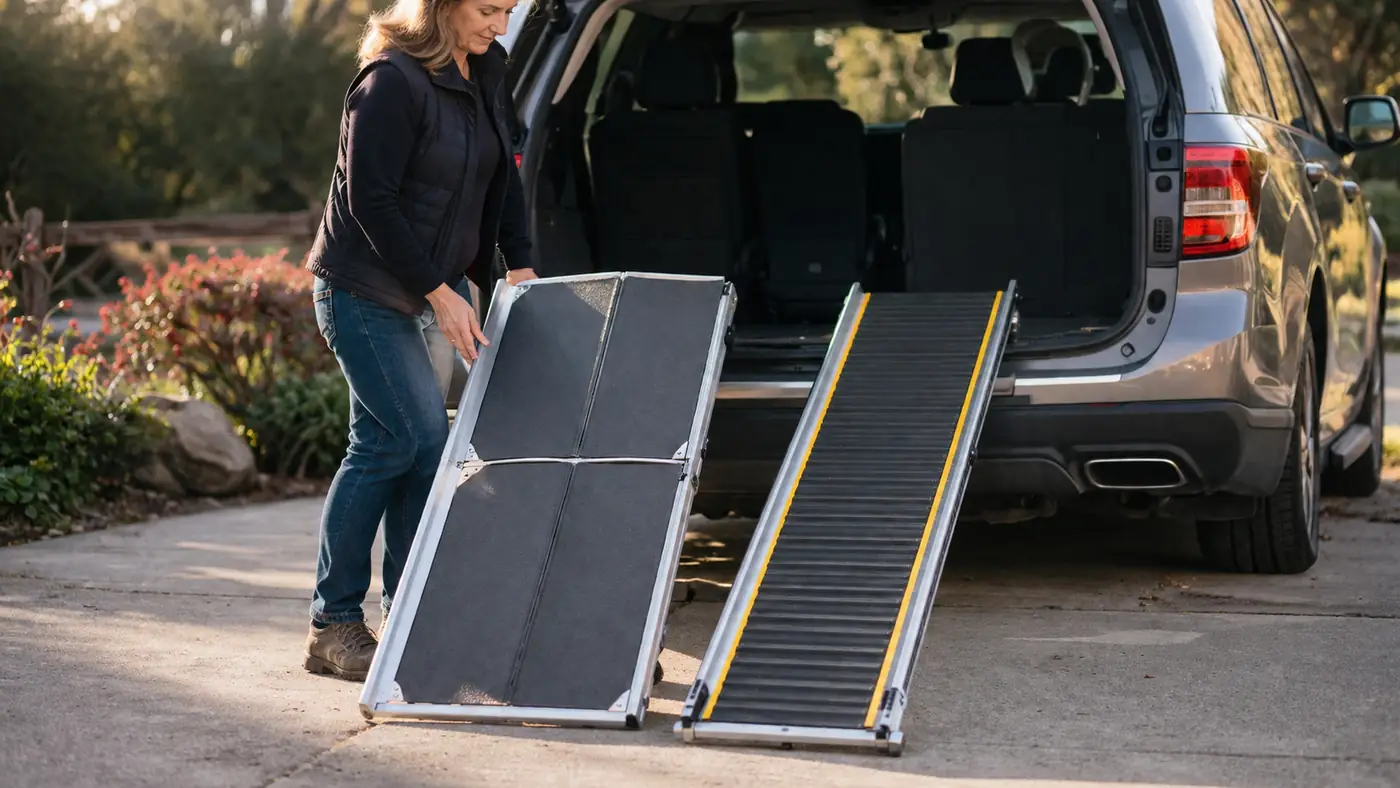
Short answer: if you're loading and unloading a dog several times a day, get the PetSafe Happy Ride. If the ramp mostly lives in your trunk for the occasional vet trip, a telescoping ramp will save you storage space and you'll survive the extra ten seconds it takes to set up.
That's the whole verdict. Everything below is why I landed there, after running both styles through actual foster dogs, actual vehicles, and actual bad weather in my driveway in Ohio. I've fostered rescues for fifteen years and my own two dogs are both past nine now, so ramps aren't a novelty item in my house, they're daily equipment. When one style consistently gets used and the other consistently gets left in the garage, that tells you more than a spec sheet ever will.
| PetSafe Happy Ride Folding Ramp | Telescoping Ramp | |
|---|---|---|
| Setup style | Bi-fold, unfolds flat in one motion | Slides out in two or three telescoping sections, needs to be extended and locked |
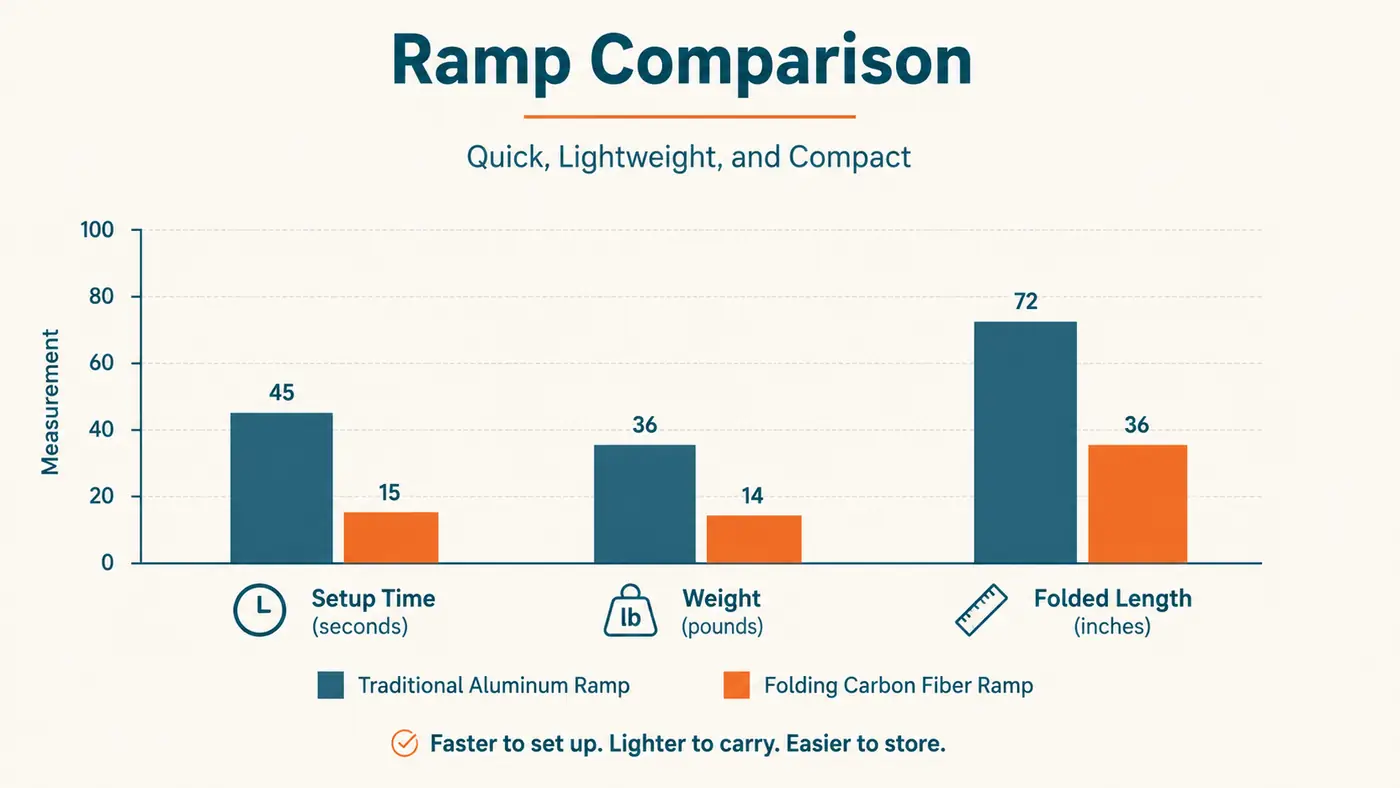
| Folded length | 31 inches folded | 18 to 24 inches folded (varies by brand) |
| Weight capacity | Up to 200 lbs | Typically 150 to 250 lbs depending on model |
| Surface traction | Textured rubber tread, grips well when wet | Ribbed aluminum, can get slick with rain or dew |
| Setup time | About 5 seconds, one motion | 15 to 25 seconds, extend and click each section |
| Storage footprint | Needs a flat spot, like a trunk floor or under a bed | Fits in a narrow gap, like beside a spare tire |
| Best for | Daily use, senior dogs, dogs nervous about height | Occasional trips, small SUVs, tight cargo space |
| Price today | Check today's price on Amazon | Varies by brand, generally comparable |
Where the PetSafe Happy Ride Wins
My oldest foster success story is a Lab mix named Denver who came through my house at eleven years old with hips that made him hesitate at anything higher than a curb. The PetSafe Happy Ride was the ramp that got him confident again, and the reason is simple: it unfolds flat in one motion. No sliding sections, no locking mechanism to fumble with while a dog is standing at your feet waiting. You pull it out of the trunk, it opens like a book, and it's down on the ground in about five seconds. When you're managing a nervous or arthritic dog, that speed matters more than people expect. Dogs pick up on hesitation, and a ramp that clicks and adjusts while they wait makes them more anxious, not less.
The surface is the other big differentiator. PetSafe covers the panel in a textured rubber-like tread that stays grippy even when it's wet, which in Ohio means most mornings from October through April. Telescoping ramps are almost always aluminum with shallow ribbing, and I've watched a foster's back paw slide sideways on a dewy telescoping ramp in a way that never happened on the PetSafe. That one moment was enough to make me distrust smooth metal ramps for any dog with joint issues.
There's also a stability difference once weight is actually on the ramp. Because the Happy Ride is a single continuous bi-fold panel, there's no seam under a dog's paws where two telescoping sections meet. My senior cattle dog mix, Winnie, is 58 pounds and walks with a slightly uneven gait from an old injury, and I noticed she plants her feet more confidently on a one-piece surface than on a ramp with a visible joint halfway up. It's a small thing, but small things are exactly what determine whether a dog uses the ramp willingly or has to be coaxed onto it every single time.
Want the ramp that unfolds in one motion, not three?
The PetSafe Happy Ride is the one I hand to foster families with senior or nervous dogs, because there's nothing to fumble with when a dog is standing there waiting.
Amazon Check Today's Price on Amazon →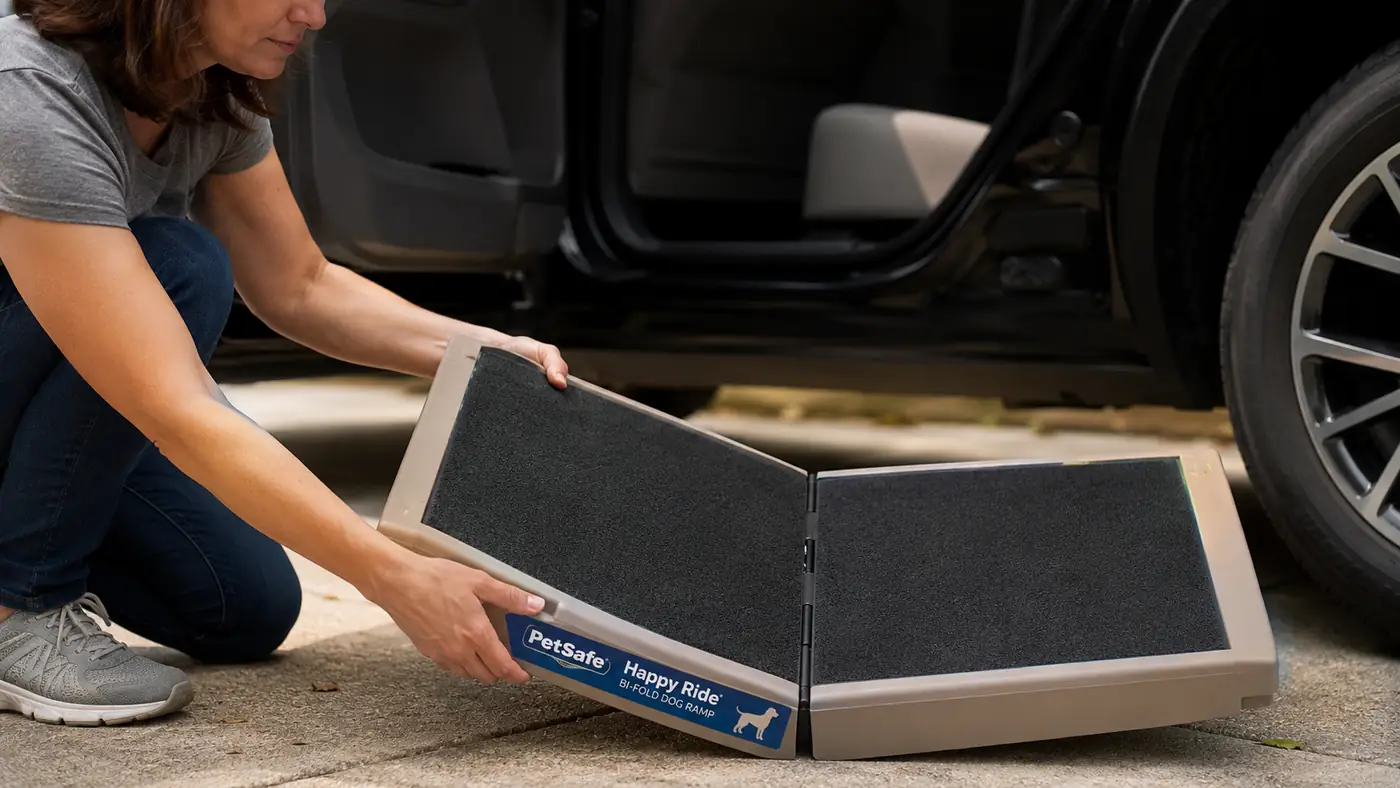
Where the Telescoping Ramp Wins
I'm not going to pretend the folding style wins everything, because it doesn't. Telescoping ramps fold down to something like 18 to 24 inches, compared to the Happy Ride's 31 inches folded. If you drive a small hatchback or a compact SUV where cargo space is already fought over by grocery bags and a crate, that difference is real. I fostered out of a Honda CR-V for two years before I upgraded, and a telescoping ramp would have tucked along the side wall next to the spare tire in a way the PetSafe never quite managed.
Telescoping ramps also tend to run lighter in some models, since there's less rubber tread material and hardware. If you're loading a smaller dog who barely needs assistance and you mostly want a ramp for the rare vet visit or the once-a-year road trip, the extra thirty seconds of setup time isn't a dealbreaker, and the smaller footprint might matter more to you than tread grip. A few of the foster families I mentor drive smaller cars and keep a telescoping ramp tucked behind a seat specifically because it's the only style that fits without eating into their cargo room. That's a legitimate use case, and I'd rather steer a reader toward the ramp that actually fits their car than push the PetSafe on everyone just because it's my personal favorite.
The ramp that saves you three inches of trunk space isn't worth much if your dog won't walk up it twice.
What Actually Changed My Mind
I used a telescoping ramp for almost a year before I switched. It wasn't a bad product, it did what it claimed. What wore me down was the daily friction of setup. Extending each section, listening for the click, double checking it locked before letting a 70-pound dog put weight on it, that's a habit you build and mostly tolerate until you're doing it in the rain with your hands full of leashes and a coffee. The PetSafe Happy Ride removed that friction entirely. Fold it out, dog walks up, fold it back, done. For a household with rotating fosters and two dogs of my own, that simplicity is worth more than the extra trunk space.
The tradeoff is real though. If storage space is your actual constraint, the folded length of the Happy Ride is something to measure against your trunk before you buy. I've had readers write in after ordering the wrong one and finding it barely fits with the back seats up. Measure first. I'd also add that the Happy Ride isn't flawless. The seam where it folds in half creates a very slight ridge underfoot, and a couple of the more anxious fosters I've worked with needed two or three practice walks before they trusted stepping over it. It's not a dealbreaker, but it's not a magic fix for every nervous dog either.
Weight, Incline Angle, and the Detail Most Buyers Skip
Neither ramp style solves a problem the other one doesn't also have, which is incline angle. Both the Happy Ride and most telescoping ramps run around 62 to 72 inches long, and the steeper your vehicle's load height, the harder either ramp is on an older dog's joints. I learned this the hard way with my minivan versus a friend's lifted pickup. The same PetSafe ramp felt gentle into the van and noticeably steep into the truck bed. If you drive anything taller than a mid-size SUV, plan on the dog needing a slower, more coached first few trips regardless of which ramp brand you pick. This is one area where the two styles are functionally tied, so don't let it be your deciding factor between them.
Weight capacity is the other spec worth double checking against your actual dog, not your dog's breed average. The Happy Ride is rated up to 200 pounds, which covers the vast majority of large breeds, but if you've got a mastiff or a bigger rescue mix pushing past that, you'll want to check the specific telescoping model's rating since some run higher. I always recommend weighing your dog on a vet visit rather than guessing, because owners underestimate weight more often than they overestimate it. It's also worth noting that both ramp styles perform better on flat, dry pavement than on gravel or grass, since a wobbly base under the ramp's feet undermines even the best tread pattern.
Cleaning, Durability, and What Wears Out First
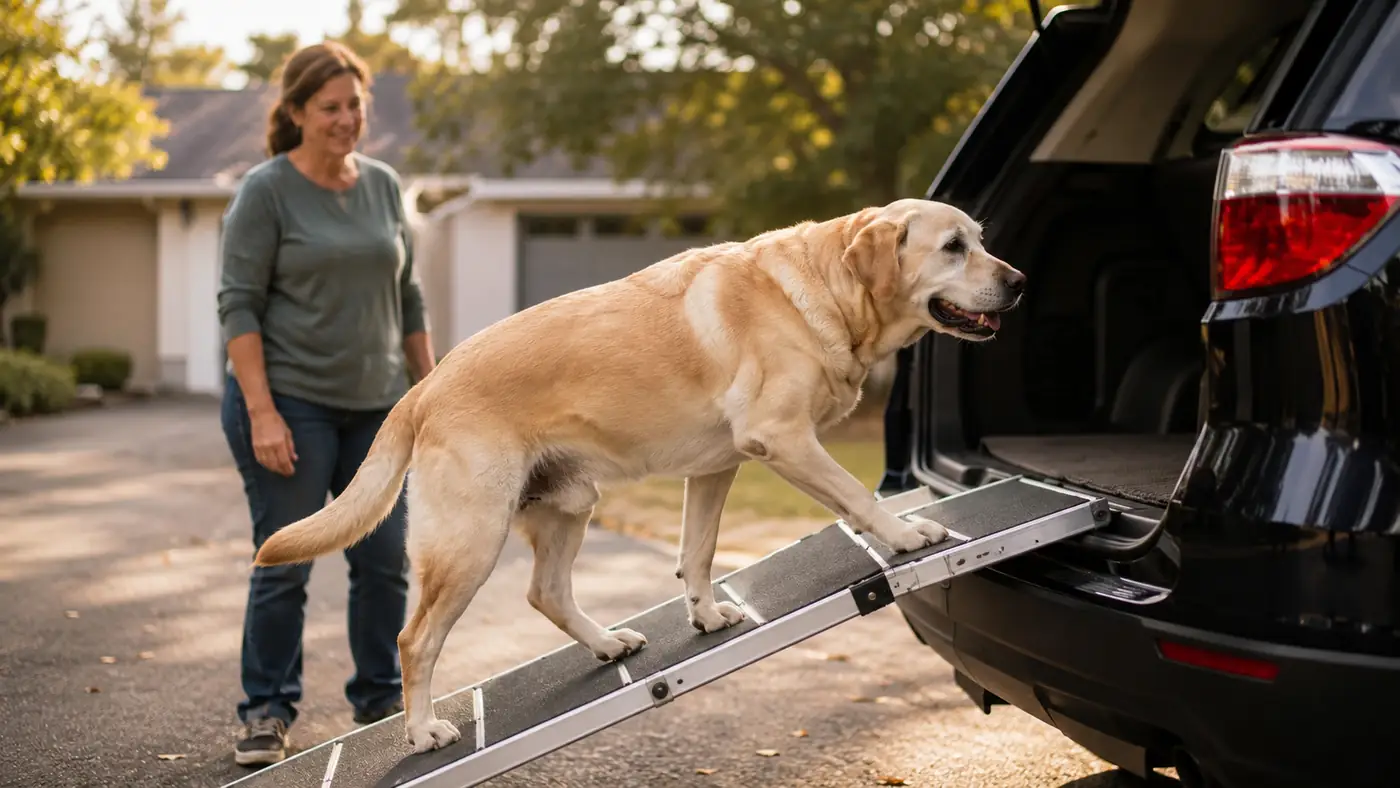
Mud is the real enemy of any ramp, not the dog's weight. The PetSafe Happy Ride's rubber tread hoses off easily and dries fast, which matters if you're hauling muddy paws in and out of a car every day like I am with two active dogs and a rotating cast of fosters. Telescoping ramps trap grime in the ribbed aluminum grooves and the sliding track where the sections overlap, and grit in that track is what eventually makes a telescoping ramp stick or squeak when you extend it. I've had a telescoping ramp jam halfway open in cold weather because of dried mud in the rail, which is not a situation you want when a dog is standing in a parking lot waiting on you.
On pure longevity, both styles hold up fine for years if you keep them dry between uses. The failure point for the Happy Ride tends to be the fold hinge after heavy repeated use, usually well past the two or three year mark in my experience. The failure point for telescoping ramps is almost always the locking mechanism or the sliding track, since it's the one part with moving metal components under load. If you want the ramp with fewer parts that can fail, the folding style is the simpler machine.
Who Should Buy Which
Buy the PetSafe Happy Ride if you have a senior dog, a dog recovering from surgery, a dog nervous about heights, or if you're loading and unloading more than once a day. The one-motion setup and rubber traction are built for repetition and for dogs who need confidence, not just a slope. Buy a telescoping ramp if your vehicle has tight cargo space, your dog is smaller and only needs occasional help, or the ramp will spend most of its life folded away for the rare trip. Neither choice is wrong, but most of the households I talk to fall into the first category more often than they expect, especially once a dog starts aging into joint issues. I'll also say this plainly: I've talked more foster and rescue families into the Happy Ride than into any telescoping model, not because it's flashier, but because it's the ramp that still gets pulled out of the trunk six months later instead of getting replaced by carrying the dog by hand, which is exactly the habit a good ramp is supposed to prevent.
Still deciding? Start with the ramp built for daily use.
If there's any chance this ramp becomes part of your everyday routine, the PetSafe Happy Ride's fold-and-go setup and grippy tread make it the safer first choice.
Amazon Check Today's Price on Amazon →